What community radio taught me about connection, and what marketing can teach community radio back.
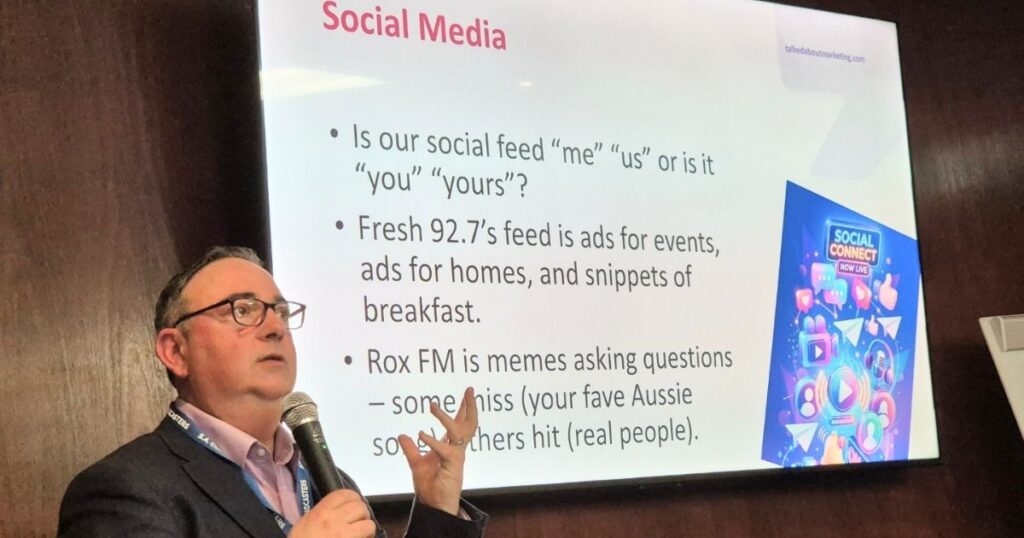
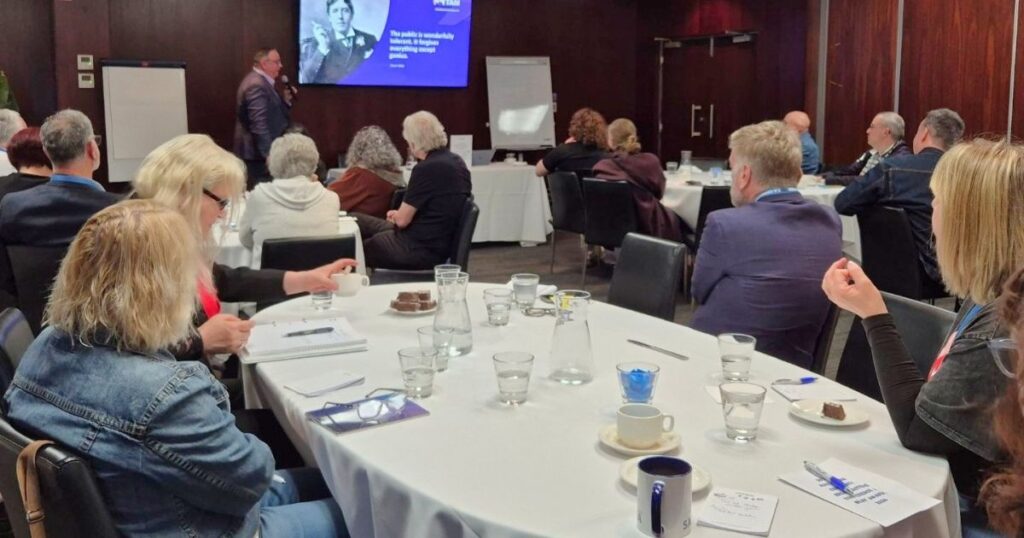
I recently addressed the South Australian Community Broadcasters Association, bringing my marketing hat to a room full of volunteers, presenters, and station managers who give their time to hyperlocal radio across the state. What follows is drawn from that talk. Most of it applies just as directly if you’re running a small business as it does if you’re running a Tuesday night jazz program.
Stop. Consider your show.
Not the station. Not the roster. Just the program you pour yourself into each week. Now imagine it stopped tomorrow. Would anyone notice? Would anyone care?
That’s not a rhetorical trick. It’s the starting question behind everything that follows.
The Problem With Getting Good at the Routine
Community radio and small business share more in common than either group tends to notice. Both run on passion. Both run on limited hours. Both can drift into a comfortable rhythm that feels like progress but isn’t.
There’s a reason for that drift, and it comes down to how brains work. The brain’s primary job is keeping you alive, and the most efficient way to do that is to conserve energy by staying in a neutral, predictable state. Habits let it coast. That’s useful for building a reliable show format, the kind where listeners set their clocks by your segments. But left unchecked, the same habit that builds loyalty can also let a program calcify into wallpaper: present, familiar, and easy to stop noticing.
The problem compounds because community stations get good at climbing a particular ladder. The show goes to air, week after week, and that consistency feels like proof of relevance. But there’s a gap that can quietly grow between what a program is good at doing and what its audience actually wants. Getting better at the routine isn’t the same as staying relevant to the people the routine is meant to serve.
Two Things Community Radio Can Do That Spotify Can’t
Music streaming and algorithm-fed playlists have made curated content abundant and free. A program built around playing songs in a pleasant order is competing against platforms with billion-dollar backing. That’s a fight worth avoiding.
What those platforms cannot replicate is hyperlocality: real knowledge of what’s happening in a specific place, the roundabout everyone complains about, the show that’s been running from the same community hall for twenty-five years. Immediacy and lived experience sit alongside it. These aren’t small advantages. They’re the entire advantage.
But hyperlocality on its own isn’t a strategy. It only becomes one once a station or a program gets specific about who it’s for.
Meet Gladys
Decades ago, an Adelaide commercial talk station built its entire on-air approach around one imagined listener. I love this example. They called her Gladys: in her fifties, kids gone, still owns a car but takes public transport sometimes, follows the AFL, plays bridge, likes picking up trivia she can pass along to friends. The morning announcer kept her photo on the console.
Every decision got simpler once Gladys existed. A cricket question wasn’t just a cricket question, it became a question about where the players eat lunch on a rest day, because that’s what would land with her. The show wasn’t guessing anymore. It knew exactly who it was talking to.
Most programs never do this work. Not because it’s hard, but because it’s easy to skip when you’re keeping a show on air week to week. The fix starts with the StoryBrand Framework, developed by Donald Miller, and it rests on one uncomfortable but clarifying idea: your show is not the hero. Your listener is.
The Framework, Plainly
StoryBrand’s structure is simple. A hero has a problem. They meet a guide who offers a plan. The guide calls them to action. Failure would matter, but with the guide’s help, the hero succeeds.
Applied to community radio, the station or program becomes the guide, not the star. The listener is the one navigating a real problem: needing local news that actually covers their street, wanting company while they cook dinner, craving two hours of jazz that lets them switch off after a hard day. The show exists to solve that problem, not to showcase itself.
This reframe changes how a pitch sounds. Compare “we play hits every Wednesday” with something built from the listener’s actual experience: two hours of uninterrupted, handpicked classical music, an antidote to drowning in workday noise. Or: frustrated by headlines that ignore what’s happening in your part of town, here’s the real coverage of your rent, your job, your city, every fortnight. One is a shopping list. The other is a reason to care.
Twenty Questions, and Where AI Actually Helps
Building that clarity starts with structured self-interview, not guesswork. Sit down with someone, or with a voice memo app, and answer questions like: when did you first fall in love with this subject? What’s happening in your listener’s life that makes your show relevant to them right now? What do they worry about, care about, and look forward to?
Once that raw material exists, transcribed and honest, it becomes useful fed through an AI tool. I use Claude, though the same approach works with any of the major tools. Not as a shortcut around the thinking, but as a way to organise it: a StoryBrand document capturing who the show is for and why it matters, a language and style guide that keeps future content sounding like the show actually sounds, and a set of prompts that turn all of that into draft social posts and promos.
The distinction matters. Feeding a blank prompt into any AI tool produces generic, forgettable copy. Feeding it real answers to real questions about a real audience produces something closer to the show’s own voice, because that’s what it’s built from.
The Digital Marketing Triage List
Once that clarity exists, where should the limited volunteer hours actually go? In order of impact:
Website first. Not necessarily a whole new site. Sometimes just a page for a program. This is where blog posts belong: the prep work an announcer already does before a classical or jazz program contains genuine expertise that, once shared, keeps working long after the show has aired. It’s also where search engines and AI tools alike go looking for evidence that a station knows what it’s talking about.
Content second. The posts and pages that live on that website. Once written, an article becomes something to draw from repeatedly for social posts, rather than a one-off task.
Lists third. Email addresses that listeners have voluntarily handed over are worth more than almost anything else in this list, because that audience chose to be reachable. Segmenting by show, where governance allows it, means people only hear about what they actually signed up for.
Reviews fourth. A surprising number of stations have warm, specific reviews sitting unanswered on Google, app stores, and even Reddit. Every unanswered review is a missed chance to close the loop with someone who already loves the show, and a missed chance to reinforce, in the reviewer’s own words and the station’s reply, exactly what the show is about, which AI search tools increasingly notice.
Social media last. Not because it doesn’t matter, but because it’s the most competitive, shortest-lived layer of the stack. It deserves attention, just not before the foundations underneath it.
Making Social Media Worth the Effort
A few practical notes I shared, in no particular order:
Audiograms, short audio or video snippets with captions, don’t require a production budget. A free Canva account, a fixed template, and a habit of swapping in new audio each week is enough to get short clips into feeds where people can stumble across a show they didn’t know existed.
Individual programs benefit from having their own social presence, not just the station. One example I shared: a two-person show with more Facebook followers than its own station, because listeners connect with the specific people making the specific thing they love.
Existing communities, Facebook groups, Reddit threads, Meetup listings built around a genre or a topic, are often a more natural home for a program’s content than building a following from nothing. The caveat: most of these groups dislike newcomers who show up only to promote something. Genuine participation has to come first.
The Real Test
Here’s a simple audit anyone can run on their own station’s website this week: does the homepage talk about us, we, and our, or does it talk about you and your? Those last two are, by a wide margin, the two most persuasive words in human communication, and most community media sites lead with the former.
The programs and stations that get this right aren’t doing anything mysterious. They’ve simply stopped assuming the audience already understands why the show matters, and started saying it plainly, from the listener’s side of the radio.
If you are deeply driven to build your program and you have an ABN, you might be entitled to 5 hours with Steve through the ASBAS Digital Solutions mentoring program. It’s $110 and together you could nut out your particular storybrand and the promotional workflows that work best for you. More details here. PS Your station ABN will not be eligible.